The SeneGence Story
Time is Our Luxury
card 01
We're not selling makeup. We're selling your morning back.
_8.jpg)
for the marketer
Every touch-up is a tiny tax on your day. Long-wear color means you pay it less often.
for the professional
Reframe the sale: you're not just competing on shade range or packaging — you're competing on how many times a day a woman has to stop what she's doing, find a mirror, and fix her face. That interruption is the real cost of conventional color.
This is our teaching framing for the brand story — "Time is Our Luxury" is not an official SeneGence corporate slogan, so don't attribute the phrase to SeneGence's materials when you say it out loud.
for the skintellectual
Conventional wax-based lip color sits on the surface of the skin rather than bonding to it, which is exactly why it transfers onto cups, masks, and collars and needs constant reapplication.
SeneGence's internal training materials describe LipSense® as a "liquid lamination system" that forms a flexible, molecular bond with the lip rather than an occlusive wax layer — the mechanical reason it holds up through a day of eating, drinking, and talking instead of needing to be redone after each one.
That structural difference is the actual engine behind any time-saved story; it isn't a marketing metaphor — it's the stated mechanism of action in the brand's own product reference.
card 02
The honest math: what does a touch-up actually cost you?
for the marketer
3 touch-ups a day, ~2 min each = 6+ min/day. That's roughly 36-60 hours a year on lip color alone.
for the professional
The illustrative arithmetic, walked through honestly — not a lab-measured statistic, just a conservative estimate:
Say the range out loud, not one fake-precise number, and always add "your mileage will vary."
for the skintellectual
Treat this strictly as illustrative modeling, never as a tested or measured claim, and never cite it alongside a percentage or study the way SeneGence's clinical data is cited elsewhere in training materials — that would misrepresent an assumption as evidence.
Assumptions, stated plainly: (1) 3 touch-ups per day, which is deliberately conservative — SeneGence's own internal materials describe conventional wax lip color as commonly reapplied 5 to 10 times per day, so 3 is a floor, not a ceiling; (2) about 2 minutes per touch-up, covering the search for a mirror or phone camera, the reapplication itself, and blotting/checking; (3) 365 days a year, acknowledging most people don't wear lip color daily, which is exactly why this is presented as a range rather than a single hard number.
6 to 10 minutes a day, multiplied by 365, lands at roughly 36 to 60 hours a year — a defensible single headline figure to anchor the graphic is approximately 48 hours a year, about 2 full 24-hour days or 3 sixteen-hour waking days. Every number here is a hypothetical built from stated assumptions, not a study result, and should always be presented with that caveat attached.
card 03
Two or three days of your life, every year, just standing at a mirror
for the marketer
That's 2-3 waking days a year you get back — for your kids, your business, your coffee still being hot.
for the professional
Translate the hours into something a client feels: 36 to 60 hours is roughly 2 to 3 sixteen-hour waking days a year that don't have to go to reapplying lip color.
It's not a dramatic transformation story — it's minutes, returned quietly, day after day, that add up to real days by December. Frame it as time given back for the things she actually wants to be doing, not as a health or performance claim.
for the skintellectual
This step is pure unit conversion from the Card 2 estimate (36-60 hours/year ÷ 16 waking hours/day ≈ 2.3 to 3.8 days), not a new data point — so it inherits every caveat from Card 2: it is illustrative, assumption-built, and will vary person to person based on how often someone wears lip color and how many touch-ups they actually do.
Never round this up into a claim like "SeneGence gives you 3 days back" stated as fact; always keep the conditional framing ("if this is roughly your pattern, this is roughly what it adds up to").
card 04
How to say it to a client without overpromising
_12.jpg)
for the marketer
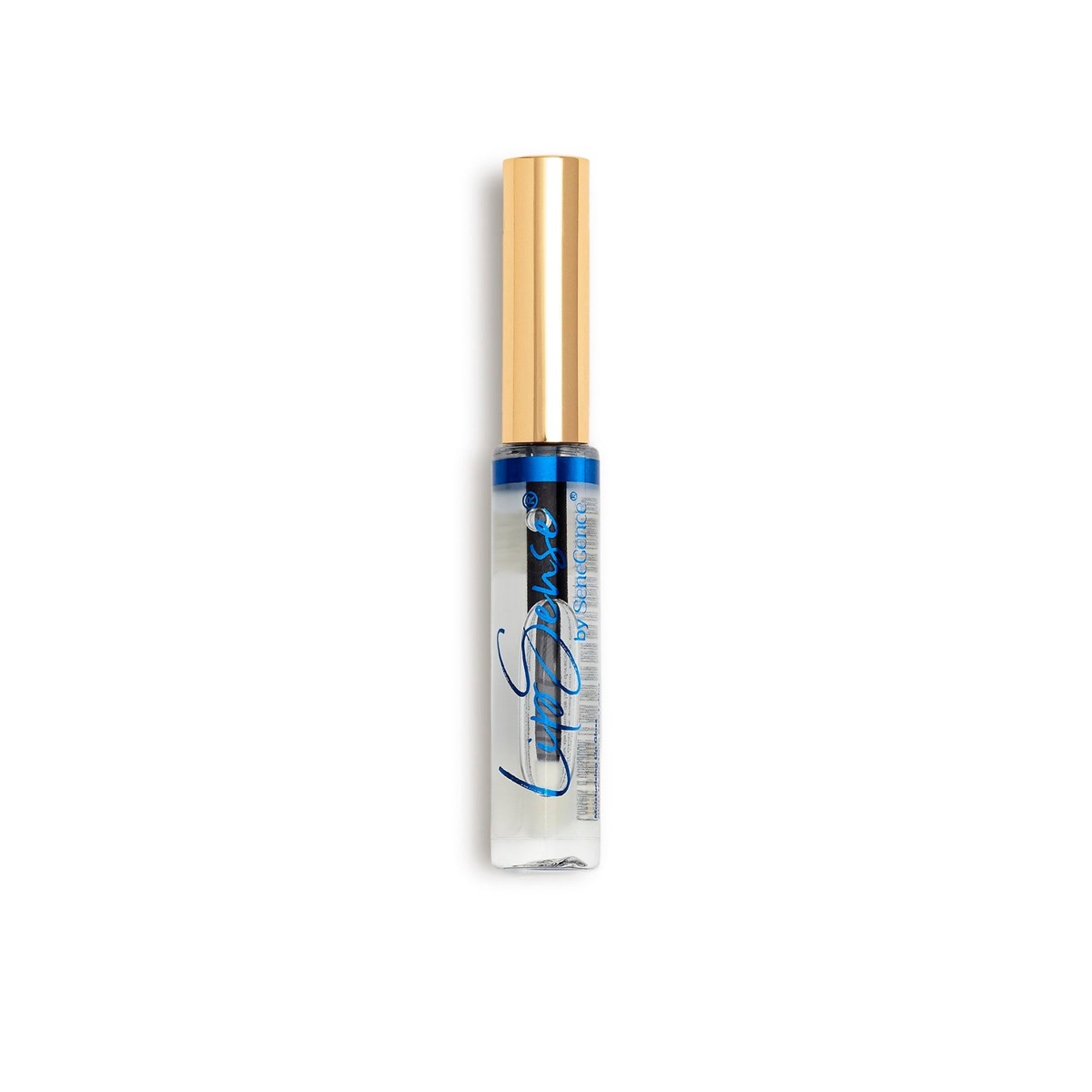
Say: "LipSense® is formulated to deliver 4 to 18 hours of wear." Never promise an exact number or a guarantee.
for the professional
The only wear-duration language to use is SeneGence's approved language: LipSense® "delivers 4 to 18 hours of wear." Give the range, never just the top end alone, and never say "guaranteed," "will last," or "permanent" — wear varies by chemistry, food, drink, application.
If pushed for one number, answer with the range plus a caveat. Keep this approved spec separate from the Card 2-3 time-saved math — one is sourced, the other is your own illustrative arithmetic.
for the skintellectual
Compliance-critical distinction: the wear-duration figure ("4 to 18 hours of wear") is a product claim drawn from SeneGence's internal reference material and should be quoted using that range, not simplified to a single number like "18 hours" stated as a guarantee — variance across individuals and conditions is real and should be acknowledged, not hidden.
The hours-per-year time-savings figure (Cards 2-3) is a completely different kind of statement: it is an illustrative, assumption-based arithmetic about touch-up frequency, not a SeneGence-sourced or lab-measured statistic, and it must never be presented adjacent to a percentage or "clinically shown" framing the way tested claims are elsewhere in the brand's materials — doing so would misrepresent a hypothetical as evidence.
Keep the two claims — one sourced and bounded, one illustrative and bounded — clearly labeled as different kinds of statements whenever this material is used publicly.
card 05
Scenario: "18 hours? Really?"
for the marketer
A client's skeptical. Answer with the real range, not the biggest number — confidence beats hype.
for the professional
A client says: "18 hours, really?" Don't defend a single big number — restate the approved range and set expectations honestly:
"It's formulated to deliver 4 to 18 hours of wear — where you land depends on things like oil levels, food and drink, and application. Even the low end of that range means far less of the constant reapplying conventional color demands." That's more convincing than insisting on the top number.