Product Basics
The LipSense System
card 01
What LipSense actually is
_7.jpg)
for the marketer
LipSense isn't lipstick. It's a long-wear Liquid Lip Color that bonds to lips like a breathable second skin, so color stays put.
for the professional
LipSense is not a lipstick, stain, or dye. SeneGence's training calls it a liquid lamination system: instead of wax that sits on the surface, transfers, and dries the lip, LipSense forms a flexible molecular bond with the skin, a breathable "second skin" that delivers 4 to 18 hours of wear while hydration passes through from the gloss.
Always call it Lip Color or Liquid Color, never lipstick (an official naming rule). It is bio-adhesive architecture, not surface color.
for the skintellectual
The mechanism is a Porous Liquid Polymer Matrix. SD40 cosmetic-grade alcohol acts as a delivery solvent that flash-evaporates on contact; polymerization then leaves the pigments suspended in a flexible, permeable polymer grid bonded to the lip surface.
The grid is porous by design: small molecules from the Shea Butter gloss pass through it to condition the lips, while large pigment molecules stay locked in place. That porosity is the whole point of the system, and it is why the color reads as long-wear rather than a heavy coat.
Keep the description in appearance-and-wear terms: LipSense is a cosmetic that colors the lips and resists transfer, not a treatment that "heals" or "repairs" them.
card 02
The three-piece system
_1.jpg)
for the marketer
The system is three pieces: the Color that locks, the Gloss that seals and hydrates, and Ooops! Remover for a clean, gentle exit.
for the professional
SeneGence's training presents LipSense as a system, not a single tube. The Color is the anchor, the Liquid Lip Color that bonds to the lip; the water-based LipSense Cream / HydraMatte is a satin option in the same family.
The Gloss is "the cure," the step that seals and hydrates through the color. Ooops! Remover is the controlled reversal, a solvent that disengages the polymer bond without scrubbing. Color makes the structure, gloss makes it wearable, remover ends it on your terms.
for the skintellectual
Color options: the original Liquid Lip Color uses the porous polymer matrix and needs the gloss to complete it; LipSense Cream / HydraMatte is a Hydro-Gel built on Aquaxyl, a sugar-derived complex, giving water-based, soft-matte or satin color with transfer resistance for up to 6 hours and no gloss cure required. LinerSense defines the vermilion border with the same permeable polymer technology delivered by a precision brush.
Removal: Ooops! Remover's Isostearyl Alcohol penetrates the polymer grid, softens the resin, and releases pigment, conditioned by Vitamins A, B, C, and E; water and standard cleansers alone can't remove the bond without abrasion, which is exactly why a dedicated solvent step exists.
Describe all three in cosmetic terms — what they do to color and comfort, not physiological repair.
card 03
The application protocol, exactly
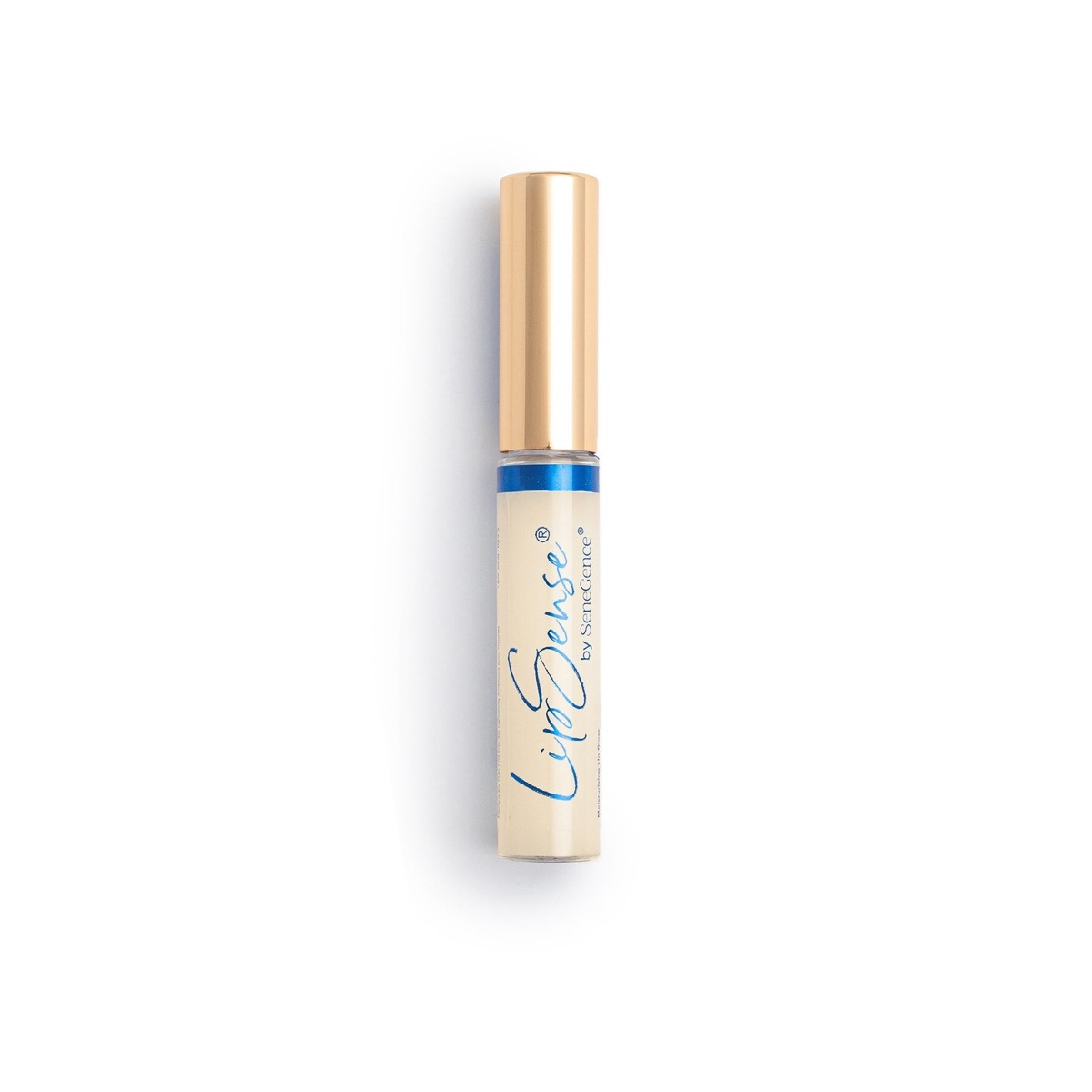
for the marketer
Clean lips → Shake horizontally → Apply 3 thin layers → Allow to dry between layers → Seal with gloss. Follow it exactly.
for the professional
The protocol is fixed — same order, every client:
The why: clean lips give the polymer a smooth surface to bond to; shaking blends the pigment; three thin layers build even, durable color where a thick coat lifts; drying between layers lets each set; the gloss completes the system. Between layers, wait about 5 seconds — thin layers dry fast; you'll see the color set.
for the skintellectual
The chemistry explains the sequence. On each pass the SD40 alcohol flash-evaporates, leaving pigment in the polymer grid, so you build thin layers and let each dry to give the solvent time to flash off and the grid time to set before the next layer goes on; a thick single coat traps solvent and lifts.
Sealing with gloss is functional, not decorative: the Shea Butter is formulated at a molecular weight small enough to permeate the grid and condition the lip while pigment stays locked, and without it the architecture fails.
SeneGence's source materials note a client may feel a slight cooling or tingling on first wear; describe that as a passing sensation and a comfort note, not evidence of "healing." Never invent timings the protocol doesn't state.
card 04
Why we say “4 to 18 hours”
_26.jpg)
for the marketer
LipSense wears 4 to 18 hours, never "up to 18" or "all day guaranteed." The honest range holds up because people and days differ.
for the professional
The exact, only wear phrasing is 4 to 18 hours, our approved language — say it that way every time. Why a range, not one number: wear depends on skin chemistry, lip prep, the layers you built, and eating and drinking through the day.
"Up to 18 hours" or "all day guaranteed" overstates performance and is a compliance problem, an unsubstantiated claim that can be screenshotted. The honest range sets expectations, so a client who gets eight hours feels the product delivered, not failed.
for the skintellectual
The variation is mechanical: LipSense bonds as a flexible polymer film, and longevity depends on how completely the layers set, on surface prep (a LipSmooth polish, a LinerSense edge), and on the challenges the film meets during the day. Oil-based lip products loosen the film, which is why oils are not worn over the color.
Contrast the numbers per product: LipSense Cream / HydraMatte's water-based Hydro-Gel is rated for transfer resistance up to 6 hours, a different figure for a different formula.
The rule is that wear claims are per-product exact phrasings and are not interchangeable: BrowSense is up to 16 hours, LipSense is 4 to 18 hours. Never round them, swap them, or merge them into an "all day" claim.
card 05
The gloss is the seal, not a topcoat
for the marketer
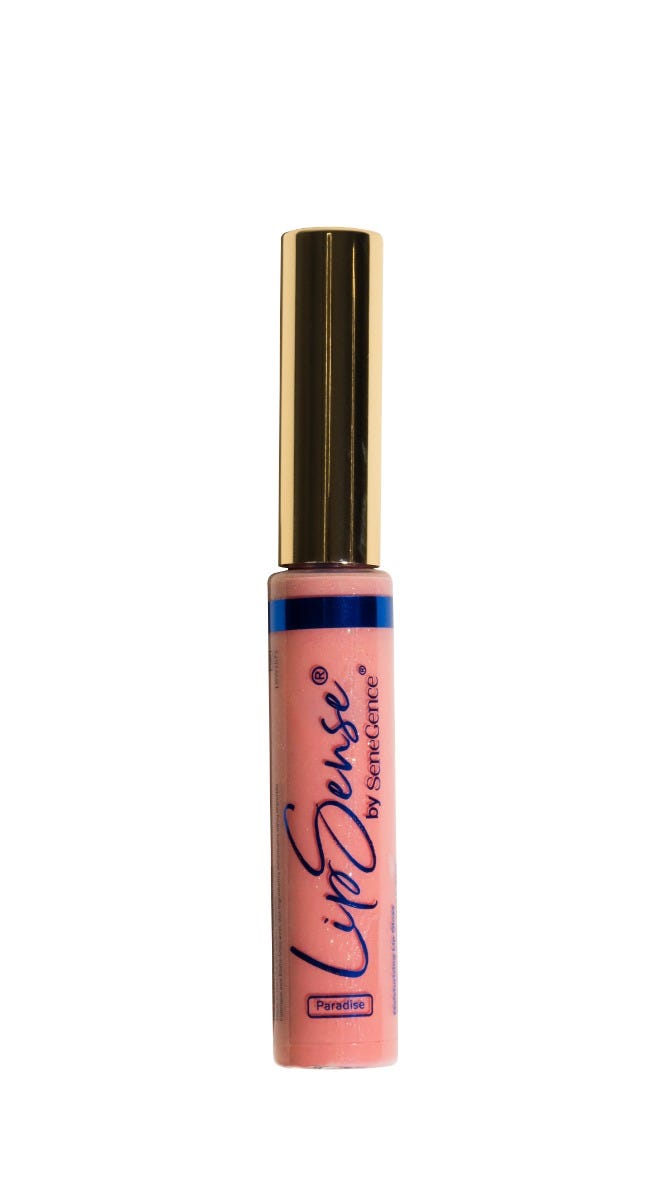
The gloss isn't optional shine, it's the seal that makes the system work — the color needs it to deliver its full wear.
for the professional
SeneGence's training calls the gloss "the cure," a hydration delivery vehicle, not a decorative topcoat. The LipSense Color forms a permeable polymer matrix so the Shea Butter in the gloss can pass through the color layer to the lip while pigment stays locked.
The gloss also neutralizes the tackiness of the dry color and stabilizes the bond. "Without the gloss, the architecture fails." Coach clients to finish with gloss, and to reapply it through the day to refresh comfort and shine.
for the skintellectual
The mechanism is Trans-Polymer Penetration. The components are Butyrospermum Parkii (Shea Butter) and Vitamin E, and the gloss is formulated at a molecular weight small enough to permeate the polymer grid, delivering lipids into the lip tissue while reinforcing the flexibility of the surface film.
Compatibility rule from SeneGence's source materials: oil-based lip products such as the Sheer Silk Lip Oil must not be worn over LipSense Color, because oils disrupt the polymer bonds; the Moisturizing Gloss is the compatible seal.
Keep the language cosmetic — the gloss conditions the look and feel of the lips and completes the wear system; even though it feels soothing, avoid drug-style "repair" or "heal" claims.
card 06
Shades and the layering wardrobe
_11.jpg)
for the marketer
One tube is a starting point. Layer LipSense shades into a whole wardrobe of looks, and match undertone, not just surface tone.
for the professional
SeneGence's training selects shades by undertone, not surface color, read from the veins at the inner wrist in daylight. Cool, blue-based undertones suit Blu-Red, Napa, or Lexie Bear-y; warm, yellow-based undertones suit Persimmon, Fly Girl, or Apple Cider; a neutral undertone wears the widest range (Bella, Praline Rose).
Because LipSense layers, a few shades stacked unlock many custom looks — a wardrobe from a handful of tubes. Teach clients to match undertone first, then layer.
for the skintellectual
Undertone versus surface tone matters: surface tone shifts with sun, redness, or illness, while undertone reflects the more stable pigment biology read from the wrist veins in natural light. Matching pigment to undertone keeps the color reading true rather than skewing orange or gray.
Layering works because each thin LipSense pass sets as its own distinct polymer film, so stacked shades combine into a new finished look — three shades layered three-deep is the basis of the 27-look wardrobe.
Always confirm a match in daylight (about 5000–6000K), the color truth standard, since fluorescent light adds a green cast and incandescent light dulls cool pigments. This is optical, appearance-level guidance, not a performance claim.