Ingredients & Clinicals
SenePlex+: The Clinical Findings
card 01
Why the clinicals matter
for the marketer
Distributors who cite the real study data build trust that lasts — and protect themselves and SeneGence from compliance risk.
for the professional
Anyone can say a product "works." What sets SenePlex+ apart is that its key claims are backed by independent, third-party clinical studies — real labs, real subjects, real measurements.
When you cite the actual numbers with their footnotes instead of marketing memory, you're more persuasive AND more protected. Vague hype is forgettable; a specific, sourced number is what makes a client trust you enough to buy.
for the skintellectual
SeneGence is a direct-sales company, which means the FTC holds the company (and, by extension, its field) responsible for claims distributors make in public — on social media, at parties, in DMs. Two things make precision essential: (1) claims get repeated and reposted verbatim, so any embellishment compounds across thousands of distributors; (2) a bare, unsourced percentage is exactly the pattern FTC enforcement targets.
This packet is built entirely from the homogenized, verified study data — not from older marketing copy, some of which includes numbers the verified studies don't support (see Card 4). Treat every stat here as the current, correct version.
card 02
What was actually studied
for the marketer
SenePlex+ was tested in two independent clinical studies — not just "trust us," real labs, real subjects, real numbers.
for the professional
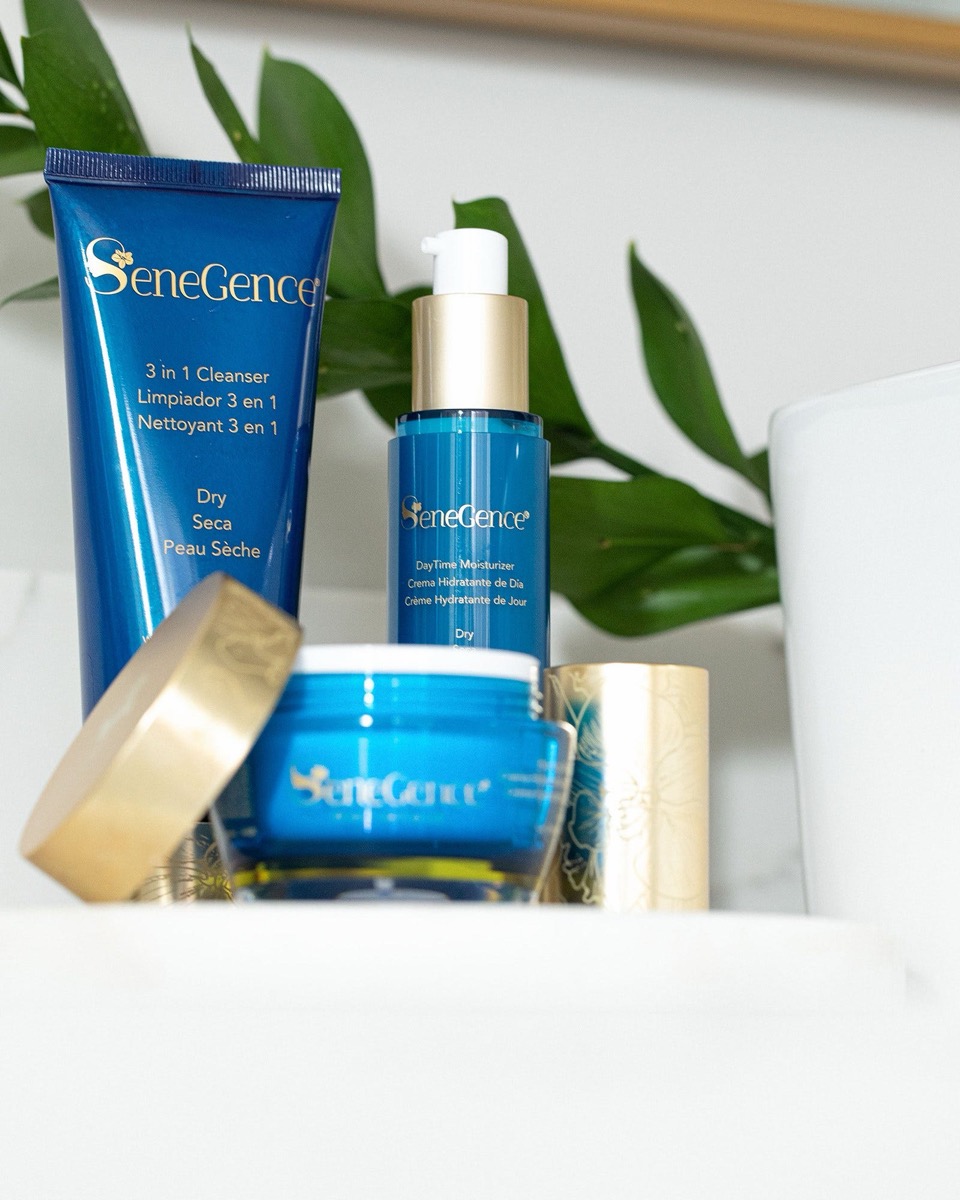
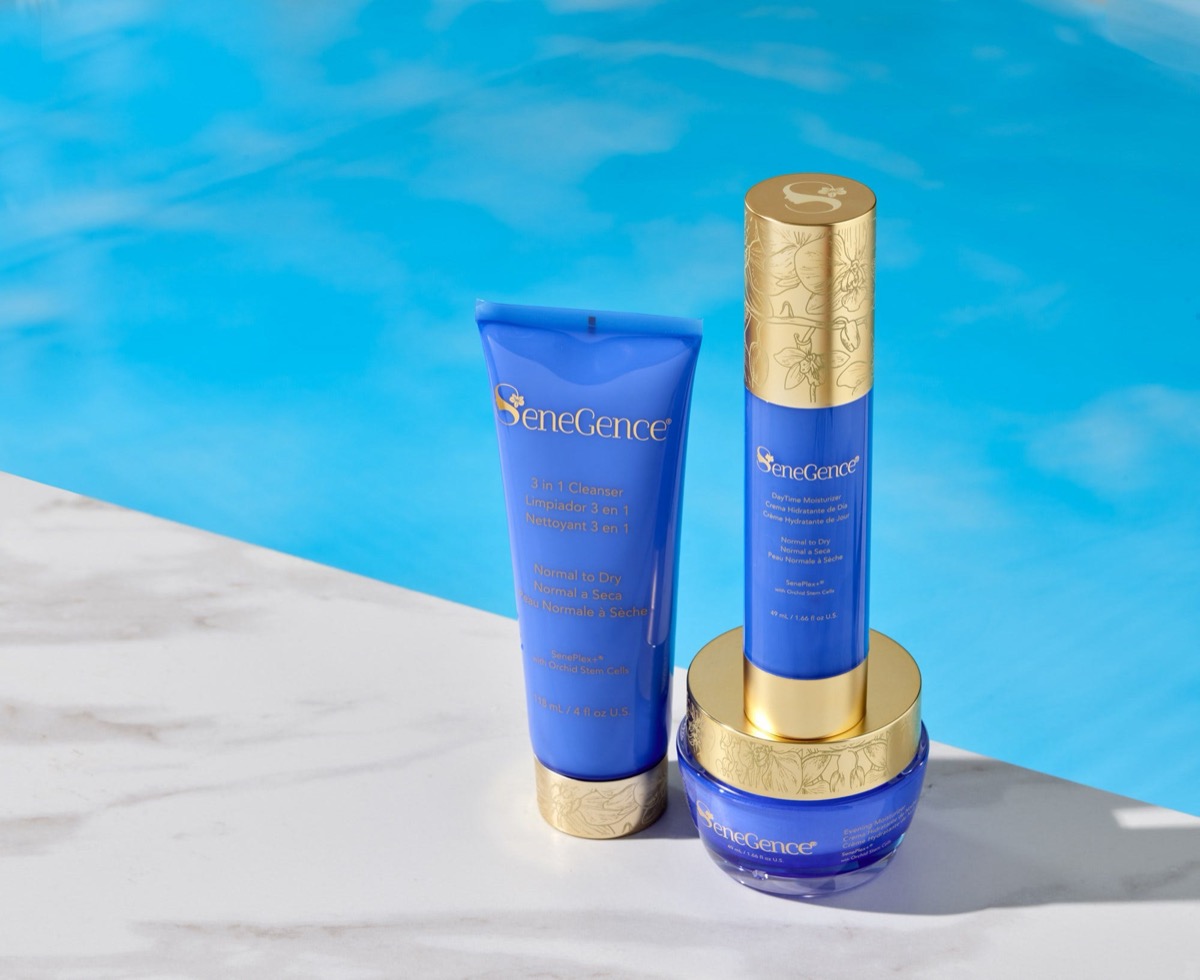
Study 1 (cell-renewal "hero" study): Essex Testing Clinic, 33 subjects, 20-day dansyl-chloride surface-renewal study — treated site vs. an untreated control site on the same subjects.
Study 2 (everyday-results study): Validated Claim Support LLC, 32 subjects, 8-week regimen study (Cleanser + Day + Evening Moisturizer, all with SenePlex+), dermatologist-supervised, measuring hydration, firmness, tone and texture against each subject's own baseline.
for the skintellectual
Study 1 detail: Essex Testing Clinic (ETC), Panel 22107, Verona NJ. 34 subjects enrolled / 33 completed, dates 21 Mar–11 Apr 2022. Test article: Evening Moisturizer Normal to Dry (SGF21090-01), which contains SenePlex+. Method: dansyl chloride stains the skin's surface cells; as those cells shed and renew, the stain fades — faster fade means faster surface turnover. Scored by visual clinical evaluation ("time to extinction" = full surface turnover), treated site vs. untreated control site.
Study 2 detail: Validated Claim Support LLC (VCS), Teaneck NJ, Study CS211017 / Protocol PR211017.V02. 34 enrolled / 32 completed, all female, ages 25–70 (mean 54). Medical Investigator: David A. Wrone, M.D. (dermatologist); PI: Anna Hardy. Design: 8-week monadic study, GCP/ICH-compliant — note it was NOT submitted to FDA and no IRB was requested, so avoid implying FDA involvement. Measured instrumentally (Corneometer for hydration, Cutometer for firmness/elasticity, Chromameter for tone, Dermo for collagen-related skin structure) plus expert dermatology grading and self-reported consumer perception, all against each subject's own Week 0 baseline.
card 03
The headline finding — say it exactly like this
for the marketer
Up to 100% greater surface-cell turnover by day 18.
for the professional
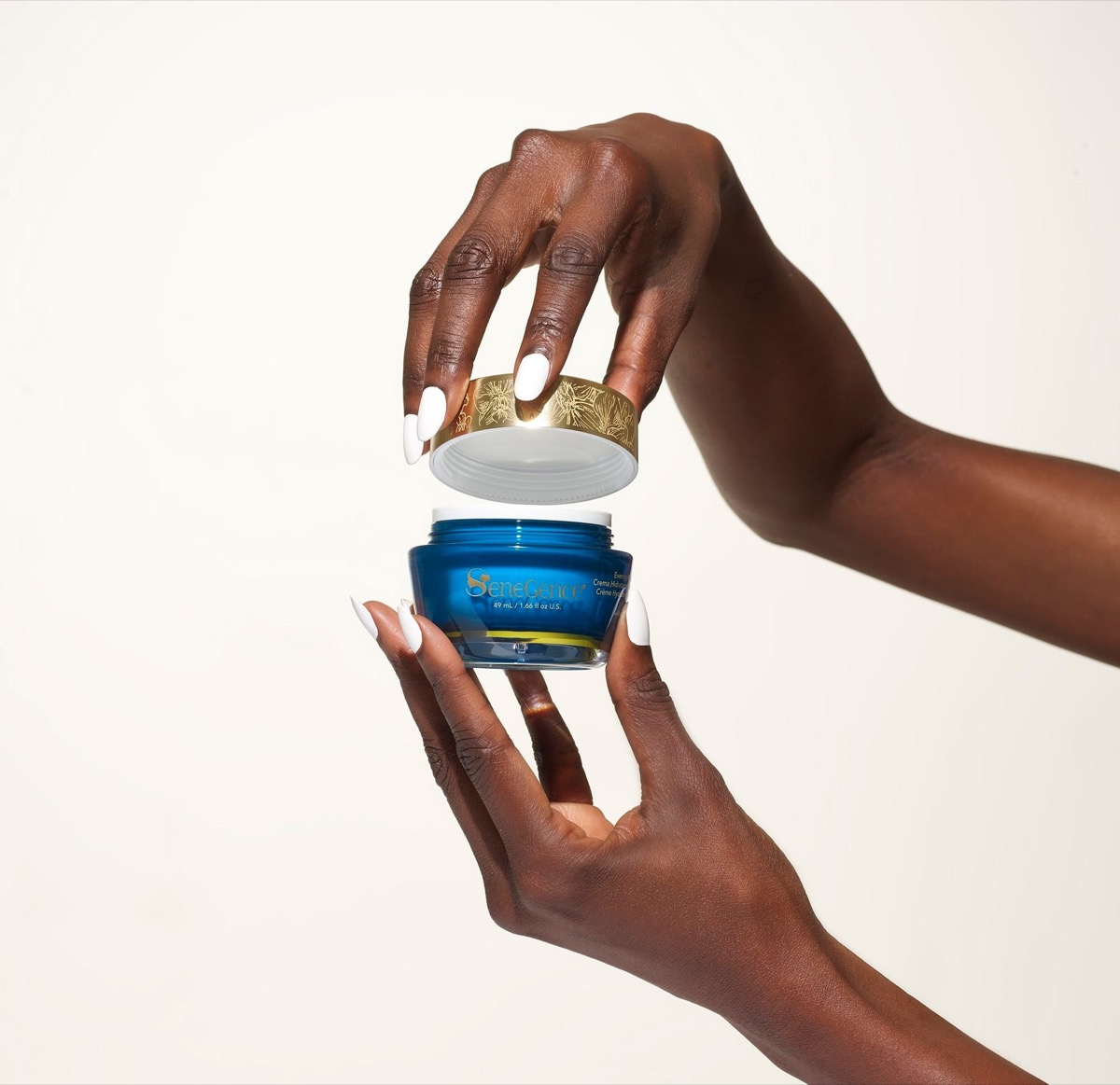
Approved turnover line: "The SenePlex+ Evening Moisturizer showed up to 100% greater surface-cell turnover than untreated skin by day 18."
Hydration (8-week study): "~50% more hydration immediately, ~29% at 8 weeks." Appearance (8-week, expert-graded): "97% saw more radiant skin, 81% firmer-looking, 72% smoother texture, 56% more even tone."
for the skintellectual
Turnover was measured at multiple timepoints: 49% greater turnover vs. control at Day 13, 80% at Day 16, 94% at Day 17, and 100% at Day 18 — statistically significant vs. control on Days 2–18, mostly p<0.001. Mean time to full surface turnover: 15.5 ± 0.4 days (treated) vs. 18.0 ± 0.4 days (control), p<0.001. The lab's own recommended framing for this result is "improved exfoliation" — a cosmetic, not biological, description.
For hydration (Corneometer, 8-week study, all p<0.001 vs. baseline): +49.99% immediately, +12.5% at Week 2, +12.0% at Week 4, +28.62% at Week 8.
For expert-graded appearance at Week 8 (all statistically significant, p<0.001 to p≤0.012): brightness/radiance 96.88%, visual firmness 80.65%, texture/smoothness 71.88%, tone evenness 56.25%, fine lines/wrinkles appearance 31.25%. Consumer self-report at Week 8 (n=32): 100% felt more moisturized, 100% said tone looked more supple, 100% said texture felt smoother, 96.88% said more luminous, and 96.88% said they would buy the product.
card 04
What you can say vs. what you can never say
for the marketer
Say the number AND the study line together. Never say "regenerates cells," "boosts collagen," or "FDA approved."
for the professional
Rule: every stat travels with its footnote (lab, subject count, duration) — a number with no source is unsupported. Say "appearance of," "showed," "clinically shown" — never "heals," "repairs cells," "stimulates collagen," "regenerates," or "treats."
Never say "FDA approved" or "peer-reviewed/published" (dermatologist-supervised ≠ published/FDA-reviewed). Never use retired hydration numbers (118%/105%) — use ~50%/~29%. Never claim collagen or elasticity improved.
for the skintellectual
Compliance framework: a claim is defensible when it (a) uses a visual/appearance verb, not a biological mechanism verb, and (b) states study context (who ran it, subject count, duration) next to the number, so it can't be screenshotted as a bare stat.
Findings that do NOT support a claim: collagen (Dermo) +0.43% at Week 8, not significant (p=0.416); elasticity (Cutometer R5) worsened −8.62% at Week 8, and this WAS significant (p=0.047) — measurably worse, so no elasticity claim at all. Instrumental tone (Chromameter L-value) was only significant at Week 4 (+5.96%) and reverted by Week 8 (−0.82%) — don't make an instrumental tone claim; the expert-graded tone-evenness number (56.25%) is the supportable one instead.
The "35.7% increase in cell renewal" sometimes seen in older marketing compares this product's ~18-day turnover to a textbook 28-day "average" cycle, not to this study's own control — it must carry that caveat if used; the direct study-vs-control figures (49–100%) are cleaner and preferred. Never blend these numbers with the older, legacy SeneDerm SenePlex study (23.3% renewal, 54.2% hydration, different instruments/era) — cite one study family, never both together.
card 05
How to show a client the results
for the marketer
Show the client the approved line on your phone — footnote included — so the claim can survive a screenshot.
for the professional
Label your own before/after photos as personal experience or testimonial — never as "the clinical results," since that data came from the lab's own subjects, not yours.
for the skintellectual
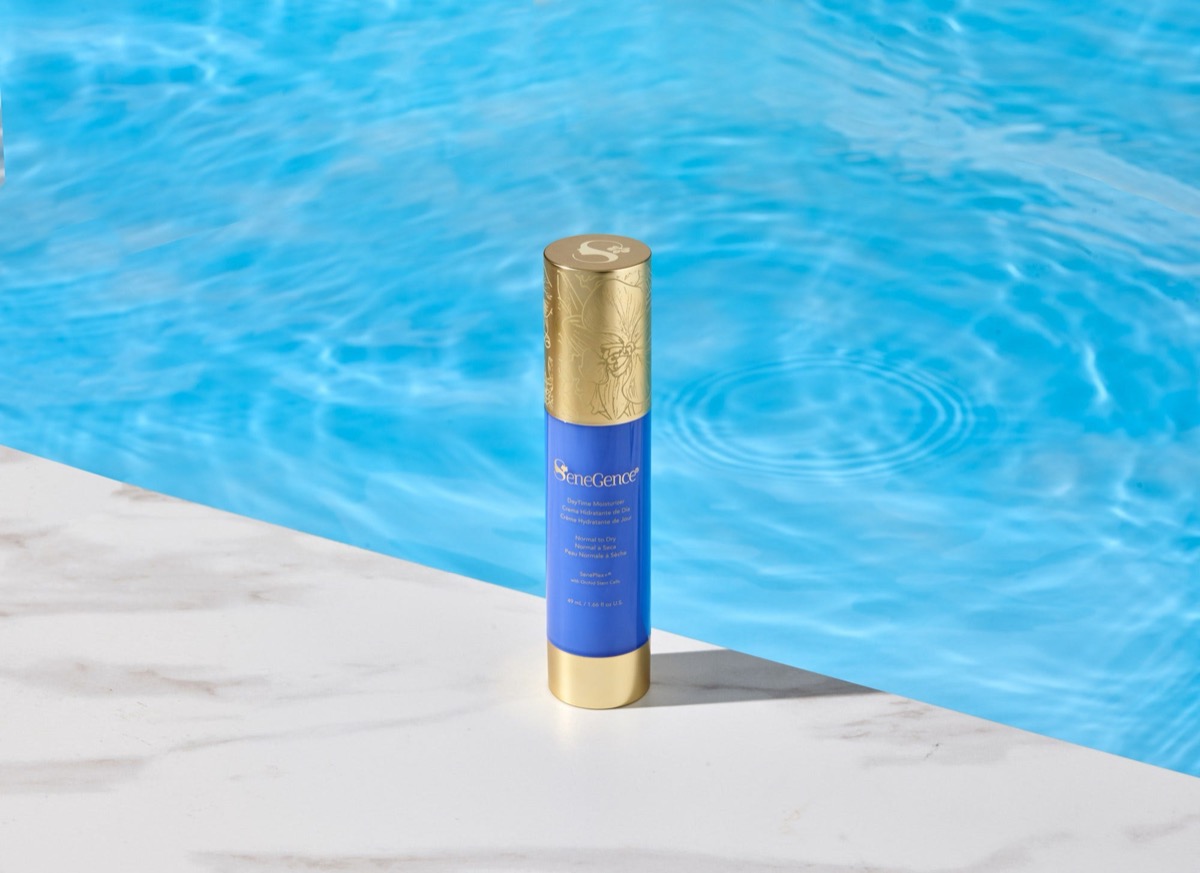
Safe elevator pitch (approved, can be used verbatim): "SenePlex+ is our Orchid Stem Cell complex that speeds your skin's natural surface renewal — independently tested for up to 100% greater surface-cell turnover by day 18 and ~50% more hydration immediately."
When asked deeper questions, you can accurately state: the studies were run by two named independent third parties (Essex Testing Clinic and Validated Claim Support, LLC), and the 8-week study's Medical Investigator was a licensed dermatologist (Dr. David A. Wrone) — so it is accurate to say a dermatologist was involved in supervising the study. It is not accurate to call the results "peer-reviewed" or "published" (no journal publication), and it is not accurate to say "FDA approved" (cosmetics claims of this kind are not FDA-reviewed, and overstating this crosses into unapproved drug-claim territory).
card 06
Recap: the numbers that hold up
for the marketer
Real labs, real subjects, real numbers: that's why SenePlex+ claims hold up — and why you always keep the footnote attached.
for the professional
Two independent studies, not marketing claims: a 20-day cell-turnover study showing up to 100% greater surface-cell turnover than untreated skin by day 18, and an 8-week regimen study showing ~50% immediate hydration, ~29% at 8 weeks, and up to 97% of women seeing more radiant skin.
Say the number, name the study, keep them together — every time.
for the skintellectual
The findings that survive scrutiny, by instrument: surface-cell turnover up to 100% greater than untreated control by day 18 (Essex dansyl-chloride study); hydration by Corneometer +49.99% immediately and +28.62% at Week 8; and dermatologist-graded appearance at Week 8 — radiance 96.88%, visual firmness 80.65%, texture 71.88%, tone evenness 56.25%.
The measures this study did not support, and that must never be claimed: instrumental collagen (Dermo +0.43%, p=0.416, not significant) and elasticity (Cutometer R5 −8.62%, p=0.047 — significantly worse). Instrumental tone (Chromameter) was mixed, so tone rests on expert grading, not the machine. Cite one study family at a time; never blend in the legacy 23.3%/54.2% SeneDerm numbers.